WorkInProgress
2024 — 2025
WorkInProgress
Co-founder & CEO · Jan 2024 – Apr 2025 · Vancouver, BC
WorkInProgress is an internship platform built by students, for students and the small-to-medium companies that hire them. Traditional job boards turned applying into a numbers game. There was mass applications on one side, keyword-matching ATS filters on the other, and neither side trusting what comes through. WIP replaced that with a curated brokerage, optimizing for relationships over resumes on a pool of verified candidates.
I co-founded it and ran it as CEO: the strategic, product and operational calls were mine, from the initial specs through fundraising.
What I owned
I ran product strategy, engineering delivery and go-to-market while leading a six-person cross-functional team of three developers, a designer and marketing. I also owned the fundraising and accelerator pipeline, writing the applications that took us to the finals of the UBC Startups SOAR Pitch Competition and within the top 5% of applicants for Summer YC '25
On the product side I ran 75+ customer discovery interviews — most of them at Vancouver Startup Week — to decode what recruiters actually struggle with, and turned those into the supply-side requirements that landed our first B2B partners. On the engineering side I worked directly on backend architecture, database modelling and analytics instrumentation.
What the product does
Four pillars, each aimed at a specific failure of the job-board model:
| Pillar | Focus | What it does |
|---|---|---|
| Application caps | Intent | A hard quota on simultaneous active applications, so volume stops being a strategy |
| Institutional pipeline | Verification | Mandatory .edu auth, mapping every profile to a verified school and grad date |
| Behavioral profiling | Fit | Interpersonal and behavioral signals assessed before technical screening |
| Recruiter tools | Throughput | Exclusive postings, candidate review, and async video screening |
The application cap is the one that defines the product. Every other board makes money when students apply more; capping applications is what makes a curated pool possible, and it only works if the postings on the other side are worth the spend.
Traction
- 250+ waitlist signups from localized campus marketing, before a line of the platform was live — demand validated before it was built
- 0 → 500+ active users in 90 days on an email-led GTM, reaching 600+ total users including 200+ verified student profiles
- 31% month-over-month growth through the late-2024 launch cycle
- 580+ internship postings aggregated to bootstrap the demand side
- 5 recruiters onboarded into the pilot, securing 5 exclusive postings and our first paid corporate partner
- +15% signup conversion by segmenting drop-off cohorts in Google Analytics and Tag Manager, then interviewing users in the cohorts that leaked
Build
Node.js and Express microservices behind a TypeScript and React frontend, on PostgreSQL hosted on Render, with media in Google Cloud Storage and identity through Firebase Auth.
What went wrong
The two-sided cold start. We spent early cycles marketing to students and recruiters at once, which is the classic way to under-serve both. Recruiters were never going to show up before the candidates did, so we pivoted to an open internship board and a bi-weekly newsletter, pooled 600+ students on that alone, and used the pool to sell the partnerships.
Overestimating B2B software adoption. The early product asked recruiters to adopt a new dashboard, manage API keys, and run candidates through a system outside their workflow. That's tool fatigue, not a value proposition. We abstracted the software away into a managed brokerage service, letting hiring managers offload filtering to us entirely.
What I'd do differently
We were students building for students, and on that side of the marketplace our instincts were right more often than not. We had no equivalent instinct for recruiters, and we never fully closed that gap. We should have been sitting with them: shadowing a hiring manager through an actual day, going where they go, learning the job rather than interviewing about it.
What crowded that out was building. We made almost everything in-house when we could have paid for it, and the time that bought us in ownership it cost us in research. Being more capital-intensive earlier would have freed up capacity to find PMF in the recruiter segment.
Recruiters live in Workday and Dayforce, and asking them to leave those systems for a second platform was a bigger ask than expected. A middleware layer might have been the answer: our application caps, institutional validation, and behavioral matching filtering candidates inside the ATS they already use, instead of asking them to come to us.
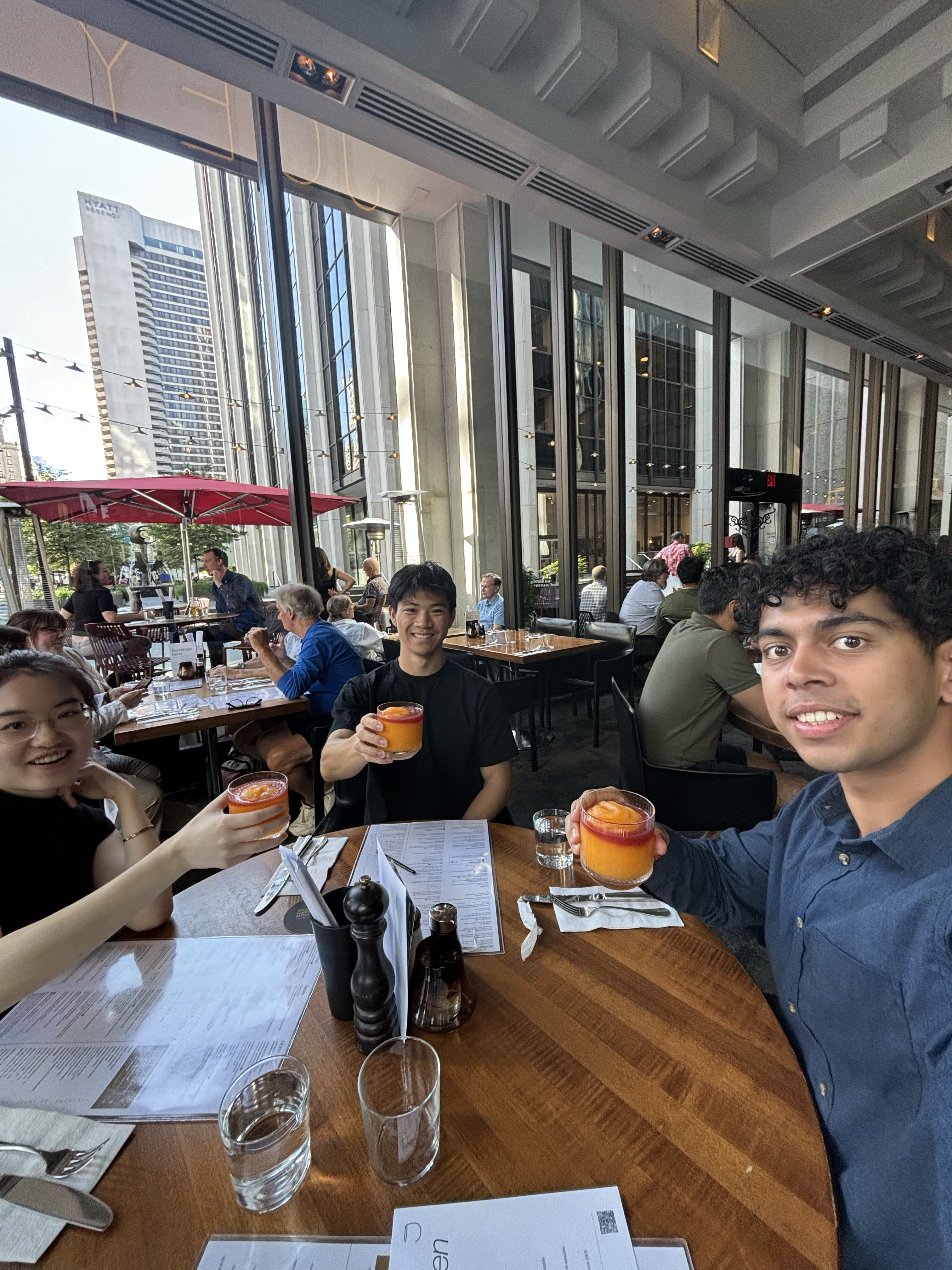
There's a demo of the platform in this folder, along with photos of the founders and the team. The product itself is at wipnetwork.ca ↗.